How to wire an Industrial Electrical Panel: A complete guide to professional wiring
Wiring is one of the most critical phases in the construction of an industrial electrical panel: a professional production guarantees a safe, reliable and long-lasting system. In this article, we’ll have a look at how to wire an industrial electrical panel, from the operational phases to the regulations, and the best practices that make the difference.
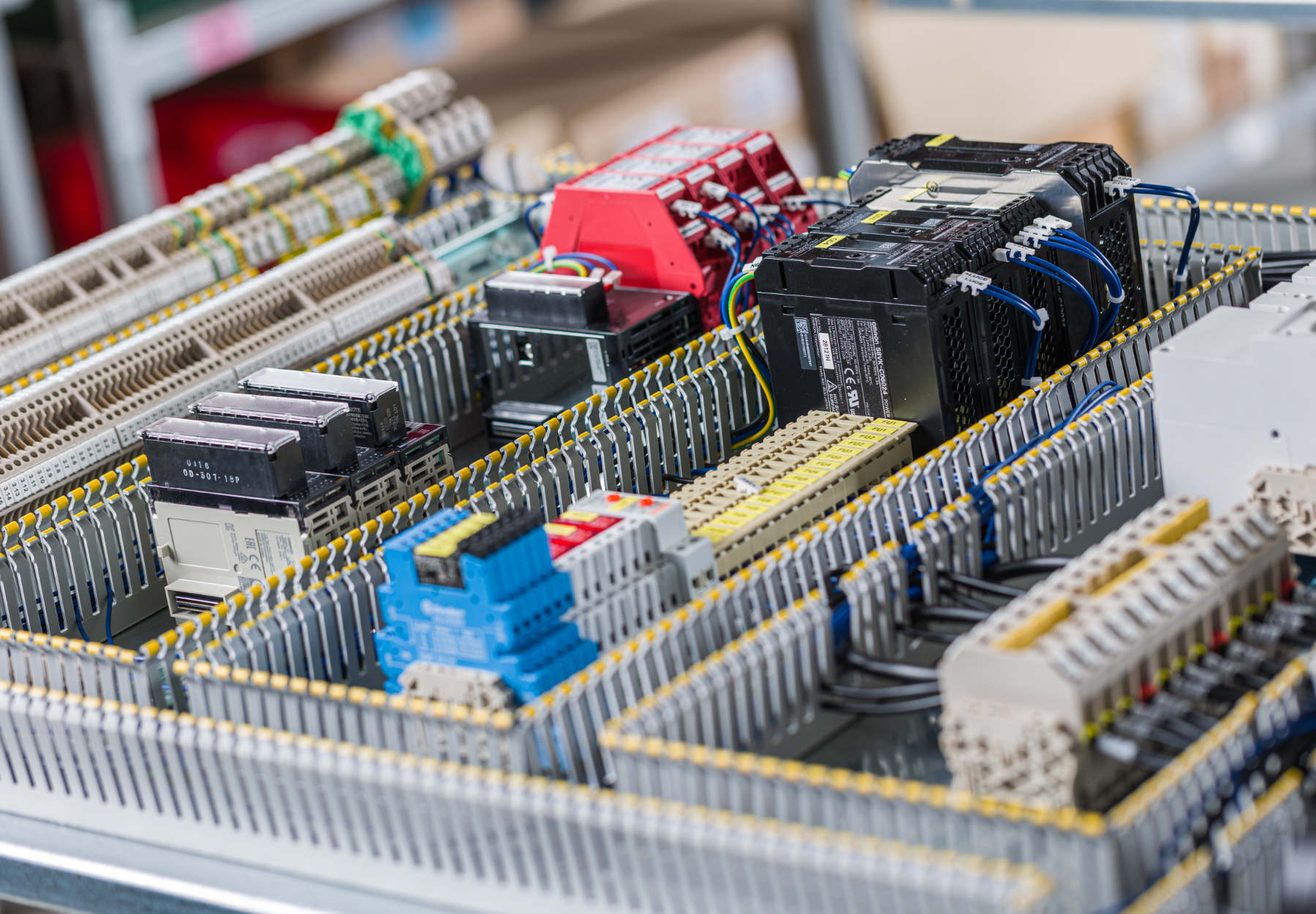
Switchboard manufactured by Cablotech
What is meant by wiring an electrical panel
When we talk about electrical wiring of an industrial panel, we refer to the operations that allow us to connect together all the electrical and electromechanical components mounted inside the carpentry: switches, contactors, relays, terminal blocks, PLCs, power supplies, transformers and much more.
Wiring harness is the nervous system of the electrical panel. Every cable, every connection, every path must be designed and created with precision, faithfully following the project’s electrical diagram.
It’s not just about “connecting wires”: it’s a technical process that requires skill, experience, and great attention to details.
The phases of wiring an industrial electrical panel
Wiring an industrial electrical panel follows a well-defined process, which Cablotech has improved over 30 years of experience. Let’s look at the main stages.
1. Analysis of the electrical diagram and project
It all starts from the electrical layout. Before even cutting a single cable, our technicians thoroughly analyse the project documentation provided by the customer, which includes the indication of the cable cross-section and the components list. Among the documents analyzed: single-line layouts, functional diagrams, assembly layouts and dedicated technical specifications.
This phase is essential for:
- Understanding the panel’s operating logic
- Identifying optimal cable routes
- Verifying component compatibility
- Planning the wiring sequence
Accurate preventive analysis prevents mistakes and final rework. This is where the foundation of quality wiring harness is built.
2. Preparation of cables and materials
Once the project is understood, we move on to preparing the materials. This phase includes:
• Selection of cables based on cross-section, nominal voltage, operating temperature and kind of insulation required
• Cutting of conductors to size, precisely calculating the lengths required for each connection
• Cable termination with lugs, terminals and pins, chosen according to the conductor cross-section and the kind of connector
• Labeling of each individual cable with codes and numbers corresponding to the wiring diagram
The choice of cables is never random. The minimum cross-sections required by the regulations must be respected, taking into account the current carrying capacities, voltage drops and environmental conditions in which the panel will operate. Inadequately cross-sectioned cables or poor-quality materials can compromise the entire system.
3. Cable routing and installation
Routing cables inside the panel is an operation that requires order and method. The conductors are laid inside cable ducts (also called wiring ducts), which act as organized guides for the cable routes.
The fundamental rules to follow at this stage are:
- Separate power circuits from signal and control circuits to avoid electromagnetic interference that could disturb the operation of more sensitive devices, such as PLCs and instrumentation.
- Respect the minimum bending radius of the cables, avoiding excessively tight bends which could damage the insulation.
- Do not overfill the cable ducts, always leaving margin for any future additions and to ensure correct heat dissipation.
- Maintain tidy and logical paths, in order to facilitate maintenance and troubleshooting operations.
Tidy wiring isn’t just an aesthetic quirk: it’s a direct indicator of the quality of the work and a concrete advantage for who will need to work on the panel in the years to come.
4. Connecting components
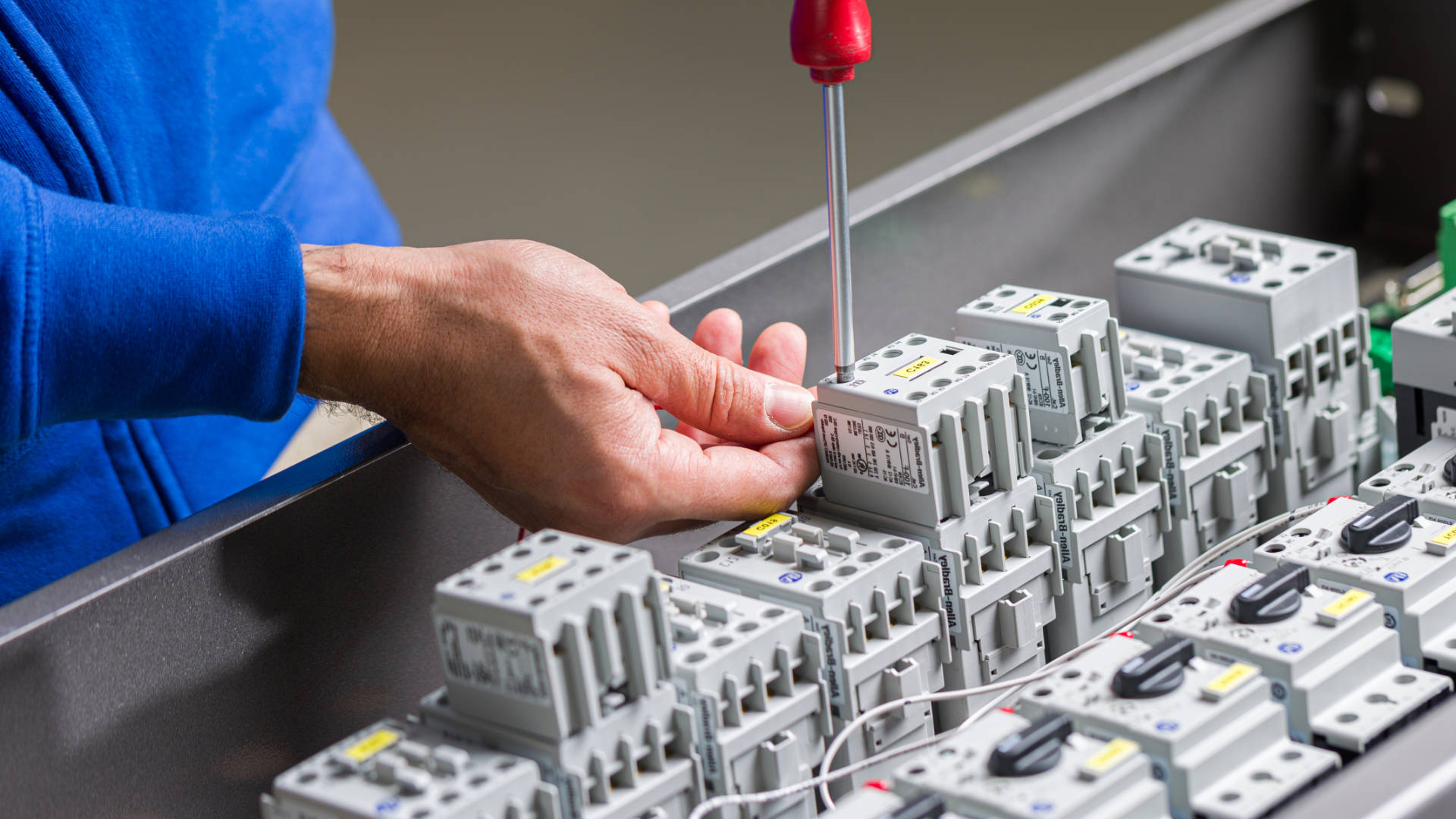
This is the central phase of the actual wiring: each conductor is connected to the corresponding component, scrupulously following the wiring diagram. Connections can be made on:
- Modular terminal blocks, which act as interface points between the internal wiring of the panel and the external cables coming from the system
- Component terminals (switches, contactors, thermal relays, motor protectors)
- PLC connectors and electronic boards
- Copper distribution bars for power circuits
Each connection must be made with the correct tightening torque:
a clamp that is too loose can cause contact resistance, overheating, and ultimately fire. A clamp that is too tight can damage the conductor or the component itself.
5. Connecting the masses and earthing
An often overlooked but crucial aspect is the ground circuit. All metal components of the panel (carpentry, doors, mounting plates, DIN rails) must be connected to the main earth bar via protective conductors of adequate cross-section (typically with yellow-green sheath).
A well-designed ground circuit is the first line of defense against indirect contact and fault currents.
6.Verification, testing and functional tests
Wiring is not considered complete until it is checked and tested.
This final phase is crucial and includes:
- Visual inspection: check of general order, correct labelling, absence of damage to cables, tightness of connections
- Checking electrical continuity: check that each connection corresponds to what is indicated in the wiring diagram, point by point
- Measurement of insulation resistance: using a megger (megaohmmeter) it is possible to verify that there are no leaks between the conductors and towards the ground
- Dielectric strength test: where applicable, a test voltage is applied to verify the insulation strength
- Functional tests: the panel is powered up and the correct functioning of each circuit is tested, checking the control logic, interlocks, start and stop sequences
Only after having successfully passed all the tests can the panel be declared compliant and ready for shipment and installation.
Wiring an industrial electrical panel requires compliance with regulations that establish precise criteria regarding conductor cross-sections, insulation distances, IP protection ratings, mandatory tests and inspections, documentation to be produced, and marking.
Working in compliance with regulations is a guarantee of safety for the end user and a sign of the manufacturer’s professionalism.
The most common errors in wiring electrical panels
Even when in wiring, experience makes the difference. Here are some of the most common errors found in poorly wired panels:
- Undersized cable cross-sections, resulting in overheating and fire risk
- Lack of separation between power and signal circuits, which generates electromagnetic disturbances and malfunctions of control devices
- Inadequate tightening torques on terminals, causing loose connections and hot spots
- Overfilled ducts, which prevent correct heat dissipation and make any maintenance intervention impossible
- Absent or incorrect labeling, which turns any future intervention into a long and risky operation
- Circuito di terra incompleto o inadeguato, con gravi conseguenze sulla sicurezza
- Cable bending radius not respected, which damage the insulation over time
All these mistakes have one thing in common: they take their toll over time, often when it’s too late. Relying on experienced professionals is the only way to prevent them.
Why rely on Cablotech for industrial electrical panel wiring?
Wiring an industrial electrical panel is much more than just connecting cables: it is a complex technical process that directly impacts the safety, performance, and longevity of the system.
At Cablotech, electrical panel wiring has been one of our core competencies for over 30 years, with a scalable approach that allows us to meet the most diverse needs alongside our customers, from co-design to complete on-board machine wiring.
Careful manufacturing and expert assembly are the key to the success of our electrical panels.
What distinguishes us is the combination of:
- Thirty years of experience in the electrical wiring and electromechanical assembly sector
- Custom Made in Italy solutions, designed and manufactured entirely in our factories
- Strict quality control on each individual panel, with documented tests and inspections
- Flexibility and reliability, because we know that in industrial contexts delivery times are as crucial as quality
If you’re looking for a reliable partner for wiring your industrial electrical panels, contact us: we will be happy to put our experience at your disposal for your project.
Looking for more information about our services?
Discover what we can do for your company.

Next Event: MECSPE
We are excited to participate in MECSPE 2026, the leading trade fair for the subcontracting sector.
We look forward to seeing you at Hall 28 – Stand A01 from March 4 to 6, 2026.
Discover how Cablotech is innovating in the field of electrical wiring, electrical panels, and electromechanical assemblies.